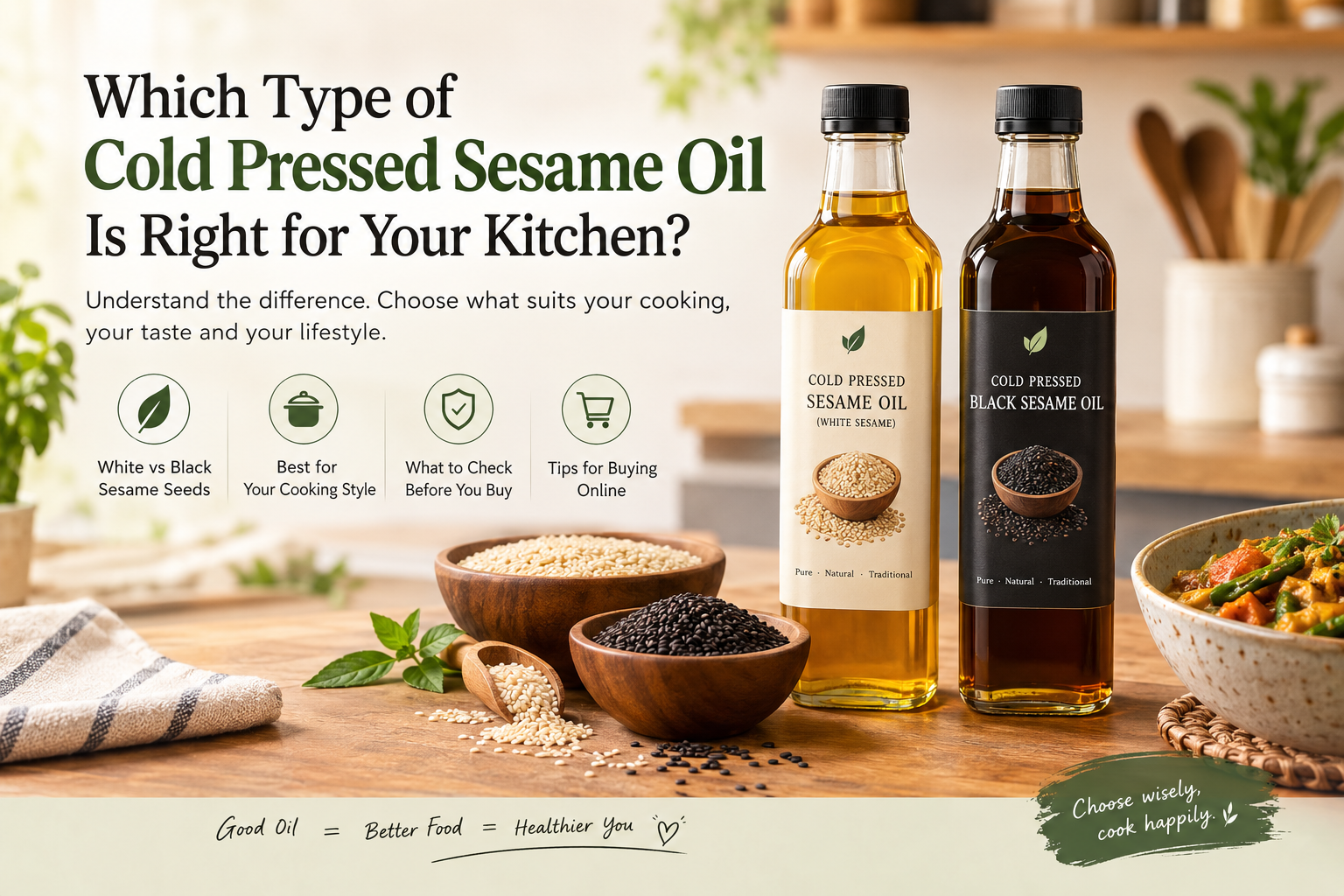
 Walk into a store or browse an online grocery website and you’ll find several sesame oil options. Some are made from white sesame seeds, some from black sesame seeds, and others are presented as traditionally pressed or naturally filtered. At first glance, choosing between them can feel surprisingly complicated.
The good news is that you don't necessarily need the most expensive bottle or the one with the most impressive label. The right cold-pressed sesame oil ↗depends largely on how you cook, what flavours you enjoy, and what you expect from the oil.
Sesame oil has been part of Indian kitchens for generations, particularly in regional cooking where its nutty aroma is an important part of the dish. FSSAI's standards recognise sesame oil as oil expressed from clean sesame seeds, including black, brown, white or mixed seeds.
So, before you add another bottle to your shopping basket, let's look at the practical differences that actually matter.
Start With Your Cooking Habits
The easiest way to choose sesame oil is to start with your kitchen rather than the bottle.
Ask yourself: Where am I going to use it?
If you're mainly preparing dals, sabzis, chutneys, or traditional recipes, you may want an oil with a noticeable sesame character. If you're looking for something milder for regular cooking, your preference may be different.
There isn't one type that automatically suits every kitchen.
That's an important point because the best cold-pressed sesame oil for one household may not be the right choice for another.
White Sesame Oil: A Familiar Everyday Option
White sesame seeds are commonly used to produce sesame oil with a characteristic nutty aroma and flavour.
If you enjoy cooking traditional Indian dishes and want the sesame flavour to be present without completely dominating the dish, this can be a practical choice.
It can work particularly well when you want the oil to become part of the overall flavour rather than the main flavour.
For someone buying cold pressed sesame oil for everyday kitchen use, this is often a sensible place to start.
What About Cold Pressed Black Sesame Oil?
Cold-pressed black sesame oil is worth considering if you particularly enjoy a deeper, more pronounced sesame character.
Black sesame seeds are different from white sesame seeds, and the resulting oil can have its own distinct sensory profile. That doesn't automatically make it "better". It simply gives you another option.
Think of it like choosing between two varieties of a familiar ingredient. Your decision should come down to your recipe and personal preference rather than a claim that one variety is universally superior.
If you regularly prepare recipes where sesame flavour plays an important role, black sesame oil may be an interesting addition to your pantry.
Don't Choose an Oil Just Because It Says "Cold Pressed"
The words cold pressed can attract attention, but they shouldn't be the only thing you check.
When choosing an oil, look beyond the front of the bottle.
Check:
-
The ingredient information
-
Type of sesame seeds used, if specified
-
Manufacturing or packing date
-
Batch details
-
Storage instructions
-
Packaging quality
-
Food business or regulatory information where applicable
FSSAI's published standards also specify characteristics for sesame oil and require it to be free from rancidity, suspended or foreign matter, separated water, added colouring or flavouring substances, and mineral oil.
That gives you a useful reminder: quality isn't determined by marketing language alone.
The Bottle Matters More Than You Might Think
Here's something many people overlook.
You might spend time comparing extraction methods and seed varieties, then choose a bottle that sits in direct sunlight for weeks.
Light, heat, and repeated exposure to air aren't ideal conditions for storing edible oils. So when you're choosing cold-pressed sesame oil online, pay attention to how the product is packaged and what storage instructions the seller provides.
Once the bottle reaches your kitchen, keep it tightly closed and store it somewhere cool and away from direct sunlight.
It sounds simple, but these everyday habits matter.
Buying Cold Pressed Sesame Oil Online? Slow Down Before Clicking "Buy"
Online shopping makes it easy to compare products, but it also removes one useful thing: you can't physically inspect the bottle before purchasing it.
If you're searching for cold-pressed sesame oil to buy online in India, don't make your decision solely from the product photograph.
Read the product information carefully.
Look for details about:
Ingredients:
You should know exactly what you're buying.
Quantity:
Choose a size that suits how quickly your household uses oil. Buying a very large bottle isn't particularly useful if it will sit open for months.
Packaging:
Check whether the seller provides information about the container and sealing.
Storage:
Look for clear instructions about keeping the oil after opening.
Product information:
Manufacturing, batch, and other required details can help you make a more informed purchase.
These checks take only a couple of minutes but can save you from making a rushed decision.
Which Type Should You Keep in Your Kitchen?
Instead of asking, "Which sesame oil is the best?", ask a more useful question:
"Which sesame oil fits the way I cook?"
Here's a simple way to think about it:
Your preference
What you may consider
Everyday traditional cooking
Regular cold-pressed sesame oil
Stronger sesame character
Cold-pressed black sesame oil
Trying different flavours
Compare seed varieties
Buying online
Check ingredients, packaging and storage details
Occasional use
Choose a smaller bottle
This isn't a ranking. It's simply a way to match the product with your actual kitchen habits.
Don't Ignore Aroma and Taste
One of the easiest ways to understand whether you enjoy a particular sesame oil is to actually taste it in a familiar recipe.
You may find that one oil works beautifully in a particular dal but feels too strong in another dish. Someone else in your family may have the opposite preference.
That's completely normal.
Food isn't just about specifications on a label. Taste, aroma, and cooking habits matter too.
If you're trying a new cold-pressed sesame oil, start with a small quantity and use it in a dish where you already know how sesame oil should taste. That gives you a much better basis for comparison than simply looking at the bottle.
A Quick Quality Check Once the Bottle Arrives
When your oil is delivered, don't immediately put the bottle away without looking at it.
Take a moment to check:
-
Is the seal intact?
-
Is the bottle damaged or leaking?
-
Does the oil have an unusual smell?
-
Is the label information clear?
-
Has the product been stored appropriately?
If something seems wrong with the product or packaging, contact the seller before using it.
For food products, basic attention to storage and handling is important. FSSAI guidance also emphasises appropriate storage conditions to prevent deterioration and contamination.
What About the "Best" Cold Pressed Sesame Oil?
Searches for best cold pressed sesame oil are common, but "best" is difficult to define without knowing what you're looking for.
Do you want a stronger sesame flavour?
Are you buying it mainly for traditional recipes?
Do you use sesame oil occasionally or every day?
Are you more concerned about packaging, sourcing, or extraction?
Once you answer those questions, your choice becomes much easier.
Instead of chasing a universal "best", focus on quality, transparency, and suitability for your own cooking.
A Simple Rule for Choosing Your Oil
If you're still confused, keep it simple.
Choose a sesame oil from a producer that clearly explains what the oil is, how it is made, how it is packaged, and how it should be stored.
Then choose the seed variety and flavour profile that fits your cooking.
That approach is much more useful than choosing based solely on a bold claim printed on the front of a bottle.
For general information about food standards and safety in India, you can also refer to the Food Safety and Standards Authority of India (FSSAI) ↗.
Conclusion
Choosing cold-pressed sesame oil doesn't have to become a complicated exercise.
If you prefer a familiar sesame flavour for everyday cooking, a regular sesame oil may suit you well. If you enjoy a deeper and more distinctive profile, cold-pressed black sesame oil could be worth trying.
When shopping online, especially when searching for cold-pressed sesame oil online, look beyond the product name. Check the ingredients, packaging, product information, and storage guidance. Most importantly, choose an oil that fits the food you actually prepare at home.
At Gulab Goodness ↗, we believe choosing cooking oil should be straightforward, with clear product information to help you choose what suits your kitchen.
If you have questions about our sesame oil or need help choosing the right option, feel free to contact us ↗.
Frequently Asked Questions
Is cold-pressed sesame oil suitable for everyday cooking?
You can use it in many everyday recipes, depending on your cooking style and flavour preference. Choose an oil that suits the dishes you regularly prepare.
Is cold pressed black sesame oil better than regular sesame oil?
Not necessarily. They can have different flavour profiles, so the better choice depends on your personal preference and how you plan to use the oil.
What should I check when buying cold pressed sesame oil online?
Check the ingredient information, seed type if specified, packaging, manufacturing or batch details, storage instructions and seller information before purchasing.
How should I store sesame oil after opening?
Keep the bottle tightly closed and store it in a cool, dry place away from direct sunlight and excessive heat.
Should I buy a large bottle of sesame oil?
Only if you use it regularly. For occasional use, a smaller bottle may be more practical because it reduces the amount of time the opened oil sits in your kitchen.