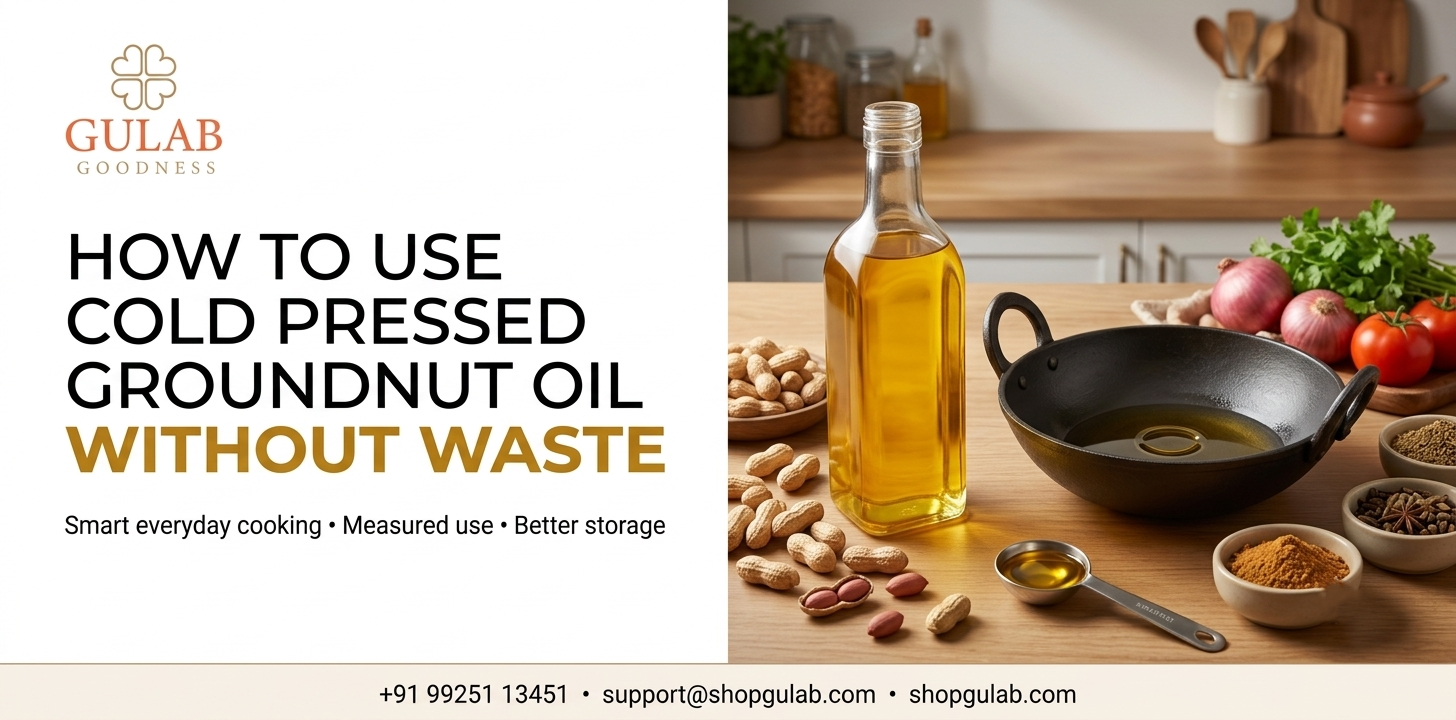
 Cooking oil is one of those kitchen essentials that gets used almost every day, yet it is surprisingly easy to waste. A little extra poured into the pan, oil left behind after frying, or a bottle stored beside the stove can gradually affect both your budget and the quality of the oil.
If you enjoy its flavour and versatility, cold-pressed groundnut oil ↗ can be used efficiently in everyday Indian cooking without making your meals complicated. The key is not to use less oil at all costs, but to use the right amount for the job and handle it properly from the bottle to the plate.
What Does "Using Oil Without Waste" Really Mean?
Oil waste is not only about throwing leftover oil into the bin.
It can happen in several ways:
-
Pouring more oil than a recipe needs
-
Using a large amount for a small batch of food
-
Leaving oil exposed to heat or sunlight
-
Reusing frying oil too many times
-
Discarding usable oil because it was poorly stored
-
Pouring directly from the bottle without controlling the quantity
These small habits may not seem important individually, but they become noticeable over weeks and months.
A smarter kitchen routine starts with one simple idea: use the amount you need, protect the oil you have, and avoid unnecessary reheating.
Start by Measuring Instead of Pouring
One of the easiest ways to reduce oil waste is to stop pouring directly from the bottle.
When making dal, sabzi, or a simple stir-fry, use a spoon or measuring utensil to add the required amount. This gives you much better control than tilting the bottle over a hot pan.
For example, if your recipe needs two teaspoons, measure two teaspoons. Don't add another splash simply because the pan looks dry.
This habit is especially useful with groundnut cold-pressed oil, where its flavour can still come through without requiring excessive quantities.
Use Different Cooking Methods Wisely
You do not need the same amount of oil for every dish.
For Tadka
Tadka usually needs only a small quantity of oil to release the aroma of cumin, mustard seeds, garlic, curry leaves or dried chillies.
Instead of covering the bottom of the pan with oil, start with the amount your recipe actually requires.
For Sautéing
When cooking vegetables, onions or spices, use enough oil to cook the ingredients comfortably. If food starts sticking, adding a large amount of oil immediately is not always the only solution.
You can adjust the heat, use an appropriate pan, and stir at the right intervals.
For Shallow Frying
Shallow frying naturally requires more oil than sautéing. However, using a suitably sized pan can prevent you from adding unnecessary quantities.
A smaller pan can sometimes help when preparing a small batch because the food requires less oil to make proper contact with the cooking surface.
Don't Heat the Oil Before You Are Ready
A surprisingly common kitchen habit is putting oil on the stove and then spending several minutes preparing the ingredients.
That means the oil is heating even though nothing is cooking.
Instead, keep your ingredients ready before heating the pan. Once the oil is at the appropriate stage for your recipe, add the ingredients and begin cooking.
This simple change helps you avoid unnecessary exposure to heat.
Use the Right Pan for the Quantity of Food
Your cookware can also influence how much oil you use.
If you are preparing a small quantity of vegetables in a very large pan, you may feel the need to add more oil to distribute it across the surface.
A suitably sized pan makes it easier to spread a smaller quantity of cold-pressed groundnut oil evenly.
This is especially useful for one- or two-person meals where large cookware can make small portions harder to cook efficiently.
What Should You Do With Leftover Frying Oil?
This is where oil management becomes particularly important.
If you have used oil for frying, do not automatically pour it back into your main bottle. Oil that has been heated and exposed to food particles should be kept separate.
First, allow it to cool safely. If you plan to reuse it, assess its condition and filter out food particles where appropriate. However, repeatedly heating and reusing oil is not a good practice.
If the oil has become unusually dark, smells unpleasant, foams excessively, or shows other signs of deterioration, it is better to discard it rather than trying to stretch its use.
WHO's healthy-diet guidance recommends limiting fried foods and emphasises moderation and the quality of dietary fats as part of an overall balanced diet.
Don't Mix Fresh Oil With Used Oil
Another useful rule is simple: keep fresh and used oil separate.
If you have some leftover frying oil, don't pour it back into a bottle containing fresh oil. Doing so can affect the quality of the entire batch.
Instead, if you are keeping used oil temporarily, place it in a separate, clean, and suitable container and follow safe food-handling practices.
For everyday cooking, using fresh oil when needed is generally a better approach than repeatedly recycling the same oil.
Store Cold Pressed Groundnut Oil Properly
You can buy the best cold-pressed groundnut oil, but poor storage at home can still affect its quality.
After opening the bottle:
-
Keep the cap tightly closed.
-
Store it in a cool, dry place.
-
Keep it away from direct sunlight.
-
Avoid placing it next to the stove.
-
Do not leave the bottle open while cooking.
-
Follow the storage instructions provided on the label.
Heat, light, and air are all reasons to be careful about where you keep your cooking oil.
A kitchen shelf away from the cooking area is often more practical than a spot directly beside the hob.
Buy a Pack Size That Matches Your Usage
Buying a larger bottle may seem economical, but bigger is not always better.
If you live alone or cook only occasionally, purchasing more oil than you can reasonably use before its best-before date may not be practical.
On the other hand, a larger household that cooks regularly may use a larger pack efficiently.
Before you buy cold-pressed groundnut oil, consider how quickly your household normally finishes a bottle.
This is a simple way to reduce food waste and avoid keeping an opened bottle for unnecessarily long periods.
Buying Cold Pressed Groundnut Oil Online? Check More Than the Price
When shopping for cold pressed groundnut oil online, it is tempting to compare products mainly by price per litre.
Price matters, but it should not be the only consideration.
Check:
-
Ingredient information
-
Extraction method
-
Pack size
-
Manufacturing or packing details
-
Best-before information
-
Storage instructions
-
Seller or manufacturer information
-
Packaging condition
Clear product information helps you understand what you are actually purchasing.
Also be careful with exaggerated claims suggesting that one cooking oil can prevent or cure health conditions. A responsible food choice should be based on reliable information rather than dramatic promises.
Use the Bottle More Carefully
You can also reduce waste by changing how you handle the bottle.
Avoid keeping the cap open while cooking. Steam and food splashes can contaminate the opening.
If the bottle becomes greasy around the neck, wipe it with a clean kitchen towel before closing it. This keeps the bottle cleaner and prevents oil from slowly running down the sides.
It sounds minor, but these little habits make a kitchen more organised and help you keep track of how much oil you are actually using.
Don't Let Oil Become the Main Ingredient
One of the easiest ways to waste oil is to use it to compensate for poor cooking technique.
If vegetables are sticking, increasing the oil dramatically may not be necessary. Try adjusting the heat or stirring at the appropriate time.
If food is absorbing excessive oil during frying, check whether the oil temperature and food quantity are appropriate.
If a tadka feels weak, adding a large amount of oil may not be the answer. Better spice timing and proper heating can make a bigger difference.
The goal is to make the oil work with your cooking rather than relying on more oil to solve every cooking problem.
A Simple Daily Routine
You can make oil usage more efficient with a few repeatable habits:
Before cooking: Keep ingredients ready and decide how much oil the recipe requires.
During cooking: Measure the oil instead of pouring freely.
After cooking: Keep the bottle closed and return it to a suitable storage area.
After frying: Allow used oil to cool safely and assess whether it should be discarded rather than repeatedly reused.
When shopping: Choose a pack size that matches your household's actual consumption.
These habits are easy enough to follow without changing the way you cook your favourite meals.
Why Moderation Still Matters
Using less oil does not mean removing fat from your diet completely. Dietary fat is an essential nutrient, but the amount and type matter. WHO's current guidance emphasises adequacy, balance, moderation and diversity as core principles of a healthy diet.
So, the aim should not be to fear cooking oil. Instead, use it thoughtfully and make it part of a broader diet that includes vegetables, fruits, pulses, whole grains, nuts and other nutritious foods.
Conclusion
Using cold-pressed groundnut oil without waste comes down to simple kitchen habits rather than complicated rules. Measure what you need, choose the right pan, avoid unnecessary heating, store the bottle properly, and be sensible about reusing frying oil.
These small changes can help you make better use of every bottle while keeping your everyday cooking practical.
About the Brand
Gulab Goodness ↗ offers cooking oil products for households looking for quality and clear product information.
Contact Us
Want to know more about the product, availability, or ordering options? Feel free to contact us ↗—we'll be happy to help.