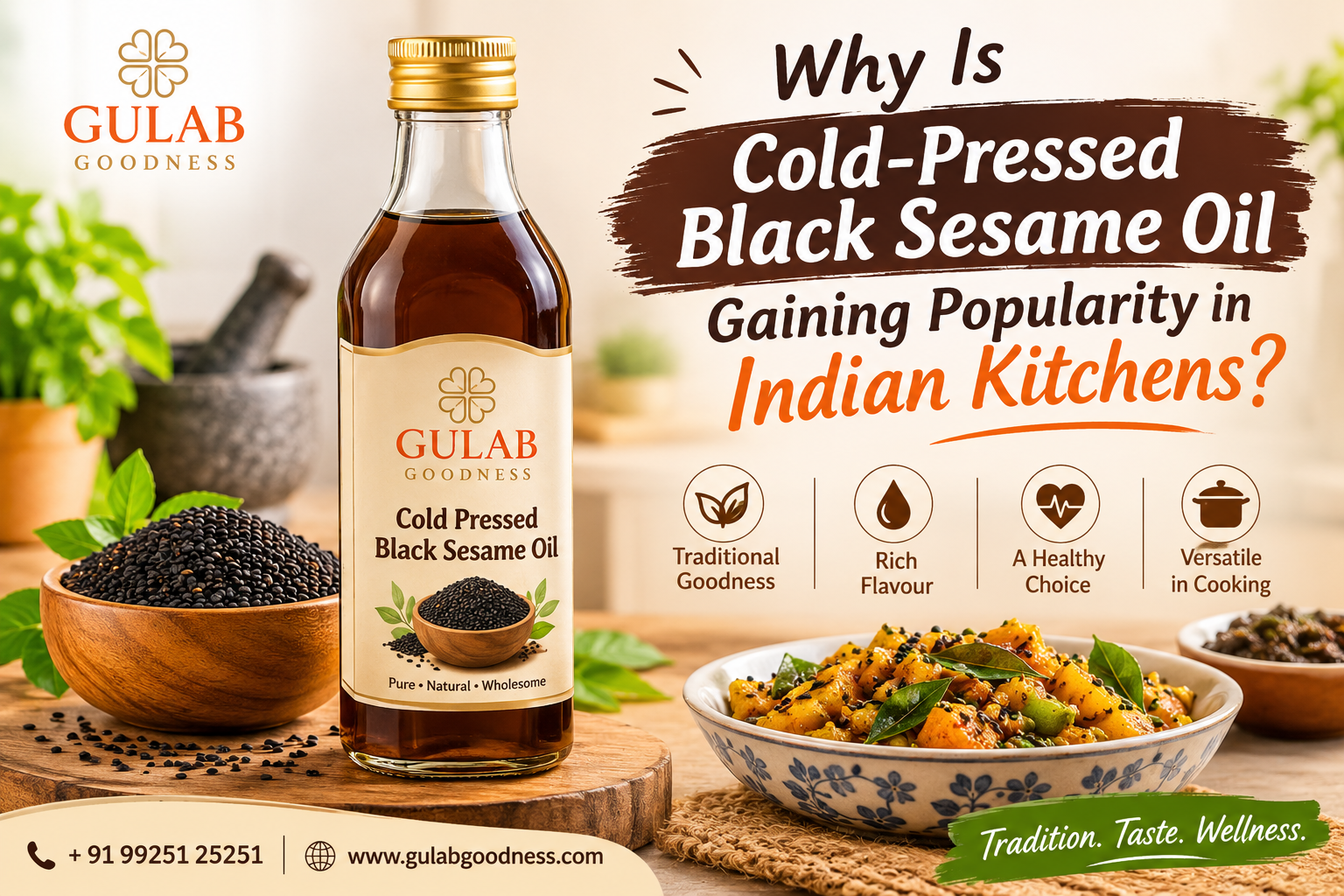
 Indian kitchens have always had a special relationship with traditional cooking oils. From the aroma of sesame oil in a South Indian tempering to the familiar taste of homemade pickles, oils have been an important part of everyday cooking for generations.
Today, many households are taking a fresh look at traditional ingredients and how they are made. One product attracting attention is cold-pressed black sesame oil ↗.
Its distinctive flavour, traditional roots, and versatility in Indian recipes make it an interesting choice for home cooks who want to bring something familiar yet different to their daily meals. But what exactly is behind its growing popularity?
Let's explore why this traditional oil is finding its place in modern Indian kitchens.
1. A Traditional Ingredient with a Familiar Taste
One of the biggest reasons people are rediscovering black sesame oil is its connection with traditional Indian cooking.
Black sesame seeds have long been used in Indian households for chutneys, sweets, spice blends, and seasonal recipes. Their deep, earthy flavour is familiar to many families, particularly those who enjoy regional foods prepared using traditional ingredients.
When these seeds are pressed into oil, they bring a distinctive character to the kitchen. Depending on the seeds and processing method, the oil may have a mild, nutty aroma that works beautifully with certain Indian dishes.
For people who enjoy cooking with ingredients that have a story behind them, cold-pressed black sesame oil offers a meaningful connection between traditional food habits and modern cooking preferences.
2. The Appeal of Cold-Pressed Extraction
The way an oil is extracted can influence its flavour, aroma and overall characteristics.
Cold pressing involves mechanically pressing seeds while keeping the extraction process relatively cool compared with high-heat processing. It is often preferred by people who want an oil with a more natural seed aroma and less intensive processing.
However, it is important to understand that cold-pressed does not automatically mean healthier or superior in every respect. The quality of the seeds, cleanliness of the equipment, handling practices and storage conditions also play important roles.
For consumers, the appeal is often simple: they want to know how their cooking oil is made and what goes into the bottle.
That interest in transparent processing has helped traditional oils regain attention among people who are becoming more conscious of their everyday food choices.
3. Its Distinctive Flavour Adds Character to Indian Recipes
Indian cooking is all about flavour. A small change in an ingredient can make a familiar dish feel completely different.
Black sesame oil has a characteristic taste that can complement several recipes when used thoughtfully.
Here are a few ways to experiment with it:
-
Vegetable stir-fries: Use a small amount to add a nutty note to sautéed vegetables.
-
Chutneys: Try it in sesame-based chutneys or roasted spice mixtures.
-
Traditional tempering: Add it to a tempering of mustard seeds, curry leaves and dried red chillies where its flavour suits the dish.
-
Pickles: Sesame oil is traditionally used in several Indian pickle preparations, contributing flavour and helping coat the ingredients.
-
Rice dishes: A little oil can be mixed into warm rice with spices or a chutney powder for a simple meal.
The key is to start with a small quantity. Black sesame oil can have a pronounced flavour, so using too much may overpower delicate ingredients.
4. Consumers Are Paying More Attention to Oil Quality
Another reason for the growing interest in cold-pressed oils is that consumers are asking better questions.
Instead of choosing cooking oil only by price or brand recognition, many people now want to understand:
-
Which seeds are used?
-
How is the oil extracted?
-
Is the oil suitable for the intended cooking method?
-
How is it packaged and stored?
-
Does the manufacturer provide clear product information?
These are sensible questions for any edible oil.
The Food Safety and Standards Authority of India provides standards for edible oils, including sesame oil, covering characteristics such as purity and quality. Consumers can explore the FSSAI food safety and standards regulations ↗ to understand the importance of food-grade quality and compliance.
A reliable product should be supported by clear labelling and appropriate food-safety practices rather than relying only on attractive packaging or claims such as "premium" and "natural."
5. Black Sesame Oil Fits the Interest in Traditional Food Practices
Many Indian households are revisiting ingredients that their parents and grandparents regularly used.
This does not mean every traditional ingredient is automatically better than a modern alternative. Rather, people are interested in understanding how familiar ingredients can fit into today's cooking routines.
Black sesame oil is part of this renewed interest because it is connected with traditional sesame-based foods and regional cooking practices.
For someone who enjoys preparing homemade meals, using a traditional oil can be a way to explore familiar flavours while making thoughtful choices about ingredients.
It is also a reminder that food trends do not always begin with something new. Sometimes, they involve rediscovering what has been part of our kitchens for years.
6. Understanding the Difference Between Black and White Sesame Oil
Black and white sesame seeds differ in appearance and may vary in their composition and flavour. However, the colour of the seed alone does not establish the quality or nutritional superiority of the oil.
The final characteristics of sesame oil depend on several factors, including:
-
The variety and quality of sesame seeds
-
Whether the seeds are roasted before extraction
-
The extraction method
-
The level of processing
-
Storage and packaging conditions
Some sesame oils have a mild flavour, while others are darker and more intense, particularly when made from roasted seeds.
It is worth remembering that cold-pressed black sesame oil and roasted sesame oil are not necessarily the same product. Roasting can significantly influence the aroma and taste, so checking the product description helps you choose an oil that suits your cooking preferences.
7. Is Cold-Pressed Black Sesame Oil Suitable for Everyday Cooking?
It can be used in everyday cooking, provided the product is food-grade and suitable for your intended cooking method.
For example, it may work well in moderate-heat sautéing, vegetable preparations, chutneys, and finishing applications. If the oil has a strong aroma, using it as a finishing oil may help preserve its distinctive flavour.
For deep frying or prolonged high-temperature cooking, check the manufacturer's recommended usage and the oil's suitability. An oil's smoke point and stability depend on its composition and processing, so it's unwise to assume every cold-pressed oil suits every cooking method.
A practical approach is to use the oil where its flavour adds value rather than replacing every cooking oil in the kitchen.
8. How to Store Black Sesame Oil Properly
Even a good-quality oil can lose freshness if it is stored carelessly.
To help maintain the quality of your oil:
-
Keep the bottle tightly closed after every use.
-
Store it in a cool, dry place away from direct sunlight.
-
Avoid keeping it beside the stove, where heat can affect its quality.
-
Use a clean, dry spoon or pouring spout.
-
Follow the storage instructions and best-before date on the label.
Sesame oil contains naturally occurring compounds such as sesamin and sesamolin, which contribute to its oxidative stability. Still, proper storage is important because all edible oils can deteriorate over time.
A fresh oil should have a pleasant aroma. If it develops an unusual, stale or rancid smell, avoid using it.
Conclusion
The growing popularity of cold-pressed black sesame oil in Indian kitchens reflects a wider interest in traditional ingredients, distinctive flavours and more informed food choices.
Its familiar connection with Indian cooking, nutty aroma, and versatility in selected recipes make it an appealing option for households that enjoy experimenting with traditional oils.
However, the best choice is not simply the oil with the most attractive label or the strongest marketing claims. Seed quality, suitable processing, food safety, freshness, and proper storage matter just as much.
For those looking to explore traditional sesame oil, Gulab Goodness ↗ offers an opportunity to discover this familiar ingredient in a way that fits today's kitchen preferences.
Contact Us ↗ to learn more about our products, their processing details, and how they can be used in your everyday cooking.