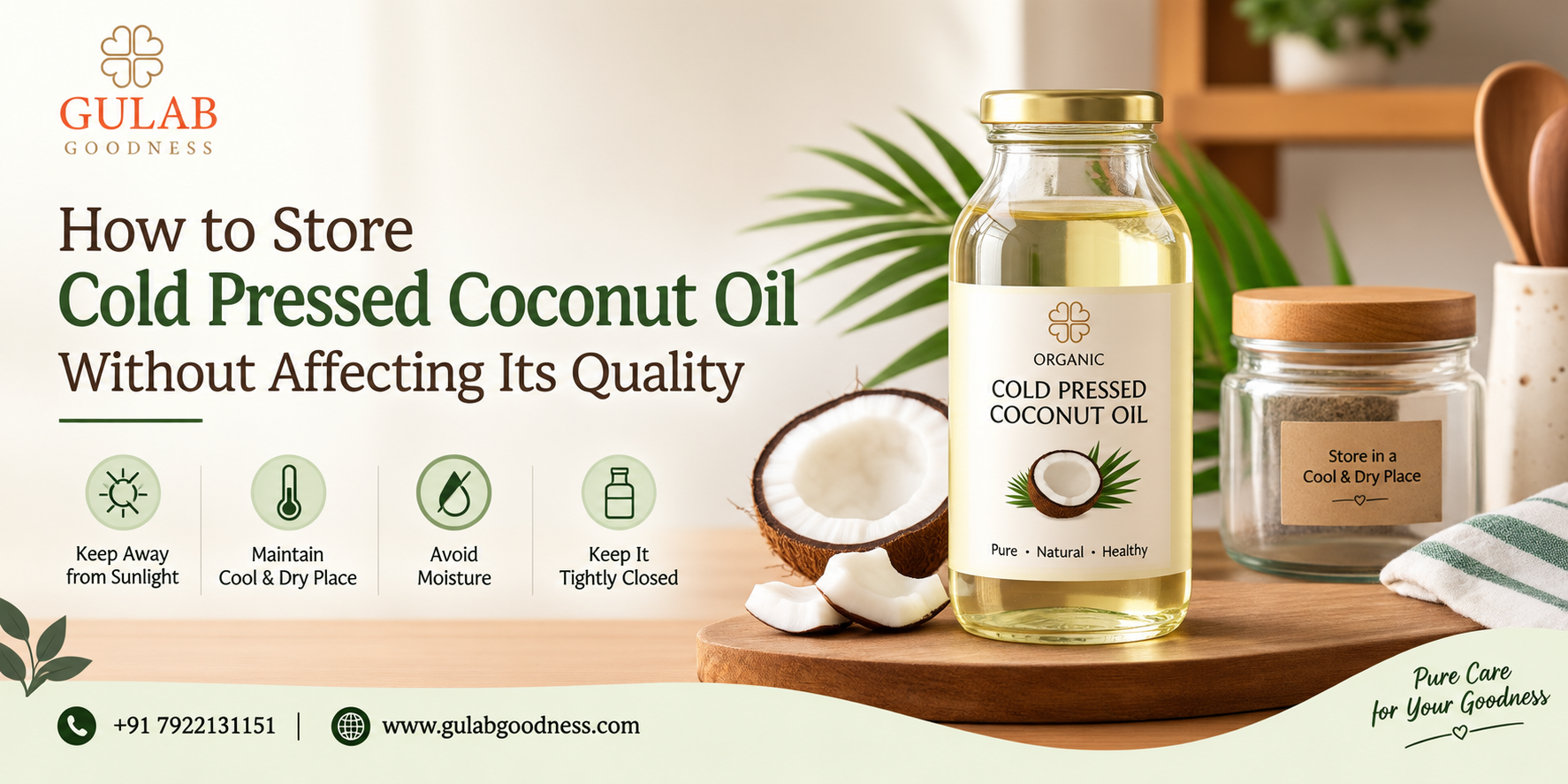
 Buying a good bottle of cold-pressed coconut oil ↗ is only half the job. The way you store it after opening can make a noticeable difference to its aroma, cleanliness, texture, and overall quality.
This is especially relevant for minimally processed coconut oils because their handling at home matters. Coconut Board guidance notes that moisture in virgin coconut oil can shorten shelf life and contribute to rancidity, which makes clean, dry handling particularly important.
So, if you have invested in a quality bottle of coconut oil, don't simply leave it beside the stove and forget about it. A few practical storage habits can help you maintain it properly.
1. Choose the Right Place in Your Kitchen
The first storage decision is where you keep the bottle.
A kitchen shelf may seem convenient, but the area immediately beside a gas burner, oven, or other heat-producing appliance can experience repeated temperature changes. Instead, choose a cool, dry, relatively stable area away from direct sunlight and cooking heat.
You don't need to create a complicated storage setup. A closed kitchen cabinet away from the stove is usually much more practical than keeping the bottle on the countertop.
The goal is consistency: avoid unnecessary exposure to heat, light, moisture, and contaminants.
2. Keep the Bottle Tightly Closed
Every time you use coconut oil, air and the surrounding kitchen environment have an opportunity to come into contact with the product.
Make sure the cap is properly closed after each use. Don't leave the bottle open while preparing food or allow the lid to sit loosely on top.
This is an easy habit to overlook, particularly when cooking quickly, but it helps keep the oil protected from airborne dust, moisture, and kitchen contaminants.
3. Keep Water Away From the Oil
This is one of the most important—and most commonly overlooked—storage habits.
Never use a wet spoon to scoop semi-solid coconut oil. Even a small amount of moisture introduced repeatedly into the container can become a quality concern.
The Coconut Board specifically notes that water in virgin coconut oil can shorten shelf life and contribute to rancidity, and recommends thoroughly dried and clean containers and packaging.
So before taking cold pressed coconut oil from the jar, make sure your spoon is completely dry.
4. Don't Store It Beside Strong-Smelling Foods
Coconut oil has its own characteristic aroma, particularly when it has a noticeable coconut character.
For this reason, storing the bottle beside strongly scented ingredients isn't ideal. Keep it away from open spice containers, pickles, onions, garlic, or other foods with intense aromas.
A tightly closed container provides protection, but sensible placement adds another layer of protection.
5. Understand Why Coconut Oil Can Become Solid
If your coconut oil becomes solid during cooler weather, don't immediately assume something is wrong with it.
Coconut oil naturally changes between liquid and solid states as temperature changes. In a cooler room, it may become firm or cloudy; in warmer conditions, it can become completely liquid.
This means you should not repeatedly heat and cool the bottle just to keep it liquid.
If you need a small amount in liquid form, take out only what you need rather than repeatedly exposing the entire bottle to temperature changes.
6. Avoid Keeping the Bottle in Direct Sunlight
A bright window may look like a convenient place to keep cooking oils, but direct sunlight isn't a sensible long-term storage environment.
Choose an opaque cabinet or another shaded location instead.
This is particularly useful for households that purchase larger bottles. The longer the bottle remains in your kitchen after opening, the more important it becomes to minimize unnecessary environmental exposure.
7. Use a Clean, Dry Spoon Every Time
There's a simple kitchen rule worth following:
Clean spoon + completely dry spoon = better handling.
Don't dip a spoon into coconut oil immediately after using it with another ingredient. Food particles can be transferred into the container, while moisture can introduce another potential quality issue.
If you use coconut oil frequently for cooking, keeping a dedicated clean spoon nearby can make this habit much easier.
8. Don't Pour Used Oil Back Into the Fresh Bottle
This is a completely different situation from storing unused coconut oil.
If you've used coconut oil for frying or cooking, don't pour the leftover oil back into the original bottle. Once oil has been heated and exposed to food particles, it should be handled separately.
FSSAI guidance on used cooking oil emphasizes that repeated reheating and reuse can deteriorate oil quality.
Keeping unused and used oil separate also prevents food particles and moisture from contaminating the fresh product.
9. Pay Attention to the Bottle Itself
Storage isn't only about temperature.
Before opening a bottle, check that the seal is intact and the container isn't damaged. After opening, make sure the cap and bottle opening remain clean.
If the bottle develops a leak, has a damaged closure, or becomes visibly contaminated around the opening, don't ignore it.
Good packaging and proper storage work together. FSSAI regulates food manufacture, storage, distribution, and related food-safety requirements, so packaging and handling are important parts of maintaining food quality.
10. Don't Assume Refrigeration Is Necessary
Many people automatically think refrigeration is the safest way to preserve every cooking oil.
For coconut oil, refrigeration generally isn't necessary simply for routine household storage. In fact, it will make the oil considerably harder and less convenient to use.
A cool, dry, dark cupboard is usually a more practical everyday location, unless the product's own label specifically recommends otherwise.
Always give priority to the manufacturer's storage instructions because packaging, formulation, and product specifications can differ.
11. Know the Signs That the Oil May Have Deteriorated
Storage problems aren't always obvious immediately.
Pay attention to significant changes in:
-
Aroma
-
Taste
-
Appearance
-
Cleanliness around the bottle opening
-
Texture that seems unusual for the storage temperature
A rancid or distinctly unpleasant smell is a particularly important warning sign. FSSAI's consumer guidance on deteriorated oil also identifies rancid odour and changes such as dark or murky appearance as signs of deterioration in used oil.
Don't try to disguise an unusual smell by adding the oil to strongly flavoured food.
A Simple Storage Routine That Actually Works
You don't need a complicated preservation routine for everyday household use.
Just follow this sequence:
After opening: Close the bottle properly.
After every use: Wipe the opening if necessary and replace the cap firmly.
When scooping: Use a clean, completely dry spoon.
For storage: Keep the bottle in a cool, dry, shaded cabinet away from the stove.
During cooking: Take out only the amount you need instead of repeatedly heating the entire container.
During inspection: Check the aroma, appearance, packaging, and best-before information.
These small habits are much more useful than constantly moving the bottle between the refrigerator, countertop, and kitchen cabinet.
What About Large Bottles?
Buying a larger bottle can be convenient, but storage becomes even more important because the product may remain in use for a longer period.
If your household doesn't use coconut oil frequently, consider whether the larger quantity is genuinely practical. Once opened, good handling becomes increasingly important.
For a large bottle, keep the main container properly sealed and avoid repeatedly leaving it open during cooking.
Cold Pressed Coconut Oil Storage: Quick Checklist
Before putting your bottle away, remember:
-
Keep it away from direct sunlight.
-
Choose a cool, dry storage area.
-
Keep the cap tightly closed.
-
Never introduce water with a wet spoon.
-
Use clean utensils.
-
Keep food particles out of the bottle.
-
Don't pour used cooking oil back into fresh oil.
-
Avoid unnecessary heating and cooling.
-
Follow the manufacturer's storage instructions.
-
Check for unusual odour or appearance before use.
Final Thoughts
Properly storing cold-pressed coconut oil doesn't require special equipment. What matters most is protecting it from unnecessary heat, sunlight, moisture, food contamination, and repeated temperature changes.
A clean, dry spoon and a cool, shaded kitchen cabinet can make a surprisingly big difference to everyday handling. And if the product label provides specific storage instructions, those should always take priority.
Gulab Goodness ↗ believes that good product quality should be supported by equally careful handling at home, from the moment the bottle is opened to the last spoonful.
For product information or assistance with your coconut oil, contact us ↗ through our customer support team, and we'll be happy to help.