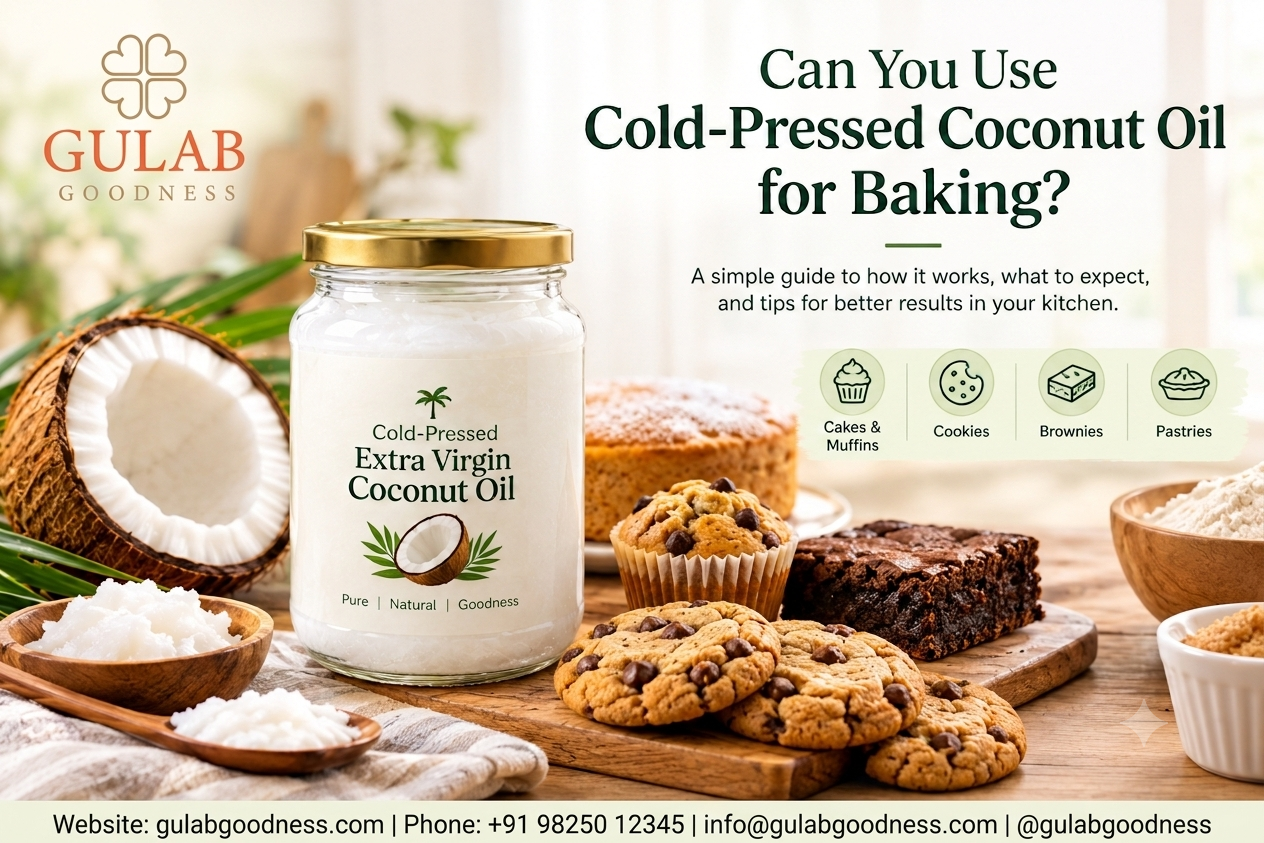
Yes, you can use cold-pressed extra virgin coconut oil ↗ for baking. In fact, it can work beautifully in cookies, cakes, muffins, brownies, and some pastries when you understand how its texture, flavour, and melting behaviour affect the recipe.
The important part is not simply replacing butter or another cooking fat with coconut oil and expecting exactly the same result. Baking is precise, and every fat behaves differently. Coconut oil becomes firm when cool and liquid when warm, so the way you measure and add it can change the texture of your finished bake.
If you enjoy a subtle coconut aroma and want to experiment with a plant-based baking fat, cold-pressed extra virgin coconut oil can be a useful ingredient in your kitchen.
What Makes Coconut Oil Different in Baking?
Coconut oil behaves differently from many common liquid cooking oils because it can be solid at cooler room temperatures and melt relatively easily when warmed.
That gives it an interesting role in baking.
When used in its solid form, it can help provide structure to certain doughs and batters. When melted, it mixes more easily with other wet ingredients and works well in recipes designed around liquid fats.
However, the final result depends on the recipe. The type of fat used can influence a baked product's spread, crumb, tenderness, and overall texture. Practical baking tests have shown that changing the fat can noticeably change the finished product.
Which Baked Foods Work Well With Cold-Pressed Coconut Oil?
You have plenty of options.
Cookies
Cookies are one of the easiest places to start. Melted coconut oil can work particularly well in recipes that already use a liquid oil. It can produce a tender texture while adding a mild coconut note.
For recipes that depend on creaming a solid fat with sugar, however, the method matters. Coconut oil may behave differently from butter because butter contains water while coconut oil is essentially all fat.
Cakes and Muffins
Coconut oil can be used in many cakes and muffins, particularly recipes that call for melted fat or vegetable oil.
The key is to make sure the melted oil is not extremely hot before combining it with eggs or other temperature-sensitive ingredients. Let it cool slightly first so that it blends smoothly without affecting the other ingredients.
Brownies
Brownies can be a good match for cold-pressed extra virgin coconut oil, especially when you want a slightly richer texture and a noticeable coconut flavour.
The oil can be melted before mixing, which makes it convenient for recipes where the fat does not need to be creamed.
Pie Crusts and Pastries
This is where things become more technical.
Coconut oil can be used for some dairy-free pie crusts and pastry preparations, but it behaves differently from butter. Recipes may need the coconut oil to remain solid and cool so the dough develops the intended texture.
So, rather than assuming a direct substitution will work, follow a recipe specifically designed for coconut oil when working with delicate pastry.
Should You Use It Melted or Solid?
This is one of the most important questions.
The answer depends on the recipe.
If a recipe asks for melted coconut oil, measure the required amount and melt it gently before adding it to the batter.
If the recipe requires a solid fat, use cold-pressed extra virgin coconut oil in its solid or softened state according to the recipe's instructions.
Do not randomly switch between melted and solid forms. The physical state of the fat affects mixing, aeration, and the final structure of your baked food.
For example, traditional creaming relies on beating a solid fat with sugar to incorporate air. Coconut oil can sometimes be used this way, but the result may differ from a recipe made with butter or another solid fat.
Will Coconut Oil Make Your Baking Taste Like Coconut?
Possibly, and that is something worth considering before you bake.
Cold-pressed and virgin coconut oils generally have more characteristic coconut flavour and aroma than highly refined coconut oil.
That can be a positive feature in recipes such as coconut biscuits, chocolate brownies, banana bread or spiced cakes.
On the other hand, if you are making a delicate vanilla cake where you want the other flavours to stand out, the coconut note may become more noticeable than you expect.
A simple rule works well: choose your baking fat based not only on texture, but also on the flavour you want in the final recipe.
Can You Replace Butter With Coconut Oil?
Sometimes, but not blindly.
Butter and coconut oil are not identical ingredients. Butter contains both fat and water, while coconut oil is almost entirely fat. That difference can affect dough consistency, moisture, and texture.
This is why a recipe developed specifically with coconut oil often gives more predictable results than making an untested substitution.
For a practical look at how different fats behave in baked goods, you can also explore this baking guide from King Arthur Baking's fat substitution guide ↗.
5 Practical Tips for Baking With Coconut Oil
1. Measure Carefully
Coconut oil can change volume slightly as it melts, so measure according to the recipe's instructions rather than guessing.
2. Avoid Excessive Heat
Melt the oil gently. You want it liquid, not extremely hot.
3. Watch Your Other Ingredients
When combining melted oil with eggs, milk, or other cool ingredients, add it carefully and mix gradually.
4. Expect Texture Differences
Even when a substitution works, your cookies or cakes may spread, brown or feel slightly different from the original recipe. Fat selection can influence both texture and appearance.
5. Start With a Tested Recipe
For your first attempt, choose a recipe that specifically uses coconut oil. Once you understand how the ingredient behaves in your oven, you can start adapting your favourite recipes.
How to Choose Coconut Oil for Baking
When selecting cold-pressed extra virgin coconut oil, look at more than the words on the front of the jar.
Check the ingredient list, packaging, batch information, storage instructions and product details. A clear description of how the oil was produced can also help you understand what you are buying.
You should also consider flavour. If the recipe includes chocolate, coconut, nuts or spices, a naturally aromatic coconut oil may complement those ingredients well.
If you are choosing an oil for everyday baking, consistency and clear product information can be more useful than judging the oil simply by its colour or whether it is liquid or solid.
Is Cold-Pressed Coconut Oil Suitable for Everyday Baking?
It can be.
The strongest advantage is flexibility. You can use coconut oil in a range of recipes while also exploring different textures and flavours.
The most important thing is to match the oil's physical state to the recipe. A baking formula designed for melted oil should be treated differently from one that requires a solid fat.
Once you get comfortable with that distinction, cold-pressed extra virgin coconut oil becomes much easier to work with.
Conclusion
So, can you use cold-pressed extra virgin coconut oil for baking? Absolutely.
It can work particularly well in cakes, muffins, brownies, cookies and selected pastry recipes. The key is understanding that coconut oil is not identical to butter or other fats. Its solid-to-liquid behaviour, distinctive flavour, and fat composition can influence the final result.
For reliable baking, follow recipes carefully, use the correct form of the oil, measure accurately, and expect some differences when substituting fats.
Gulab Goodness ↗ offers product information to help you understand the characteristics of its cooking oils before using them in your kitchen.
For product details or help with choosing the right coconut oil for baking and everyday cooking, please contact us ↗ through our official website.