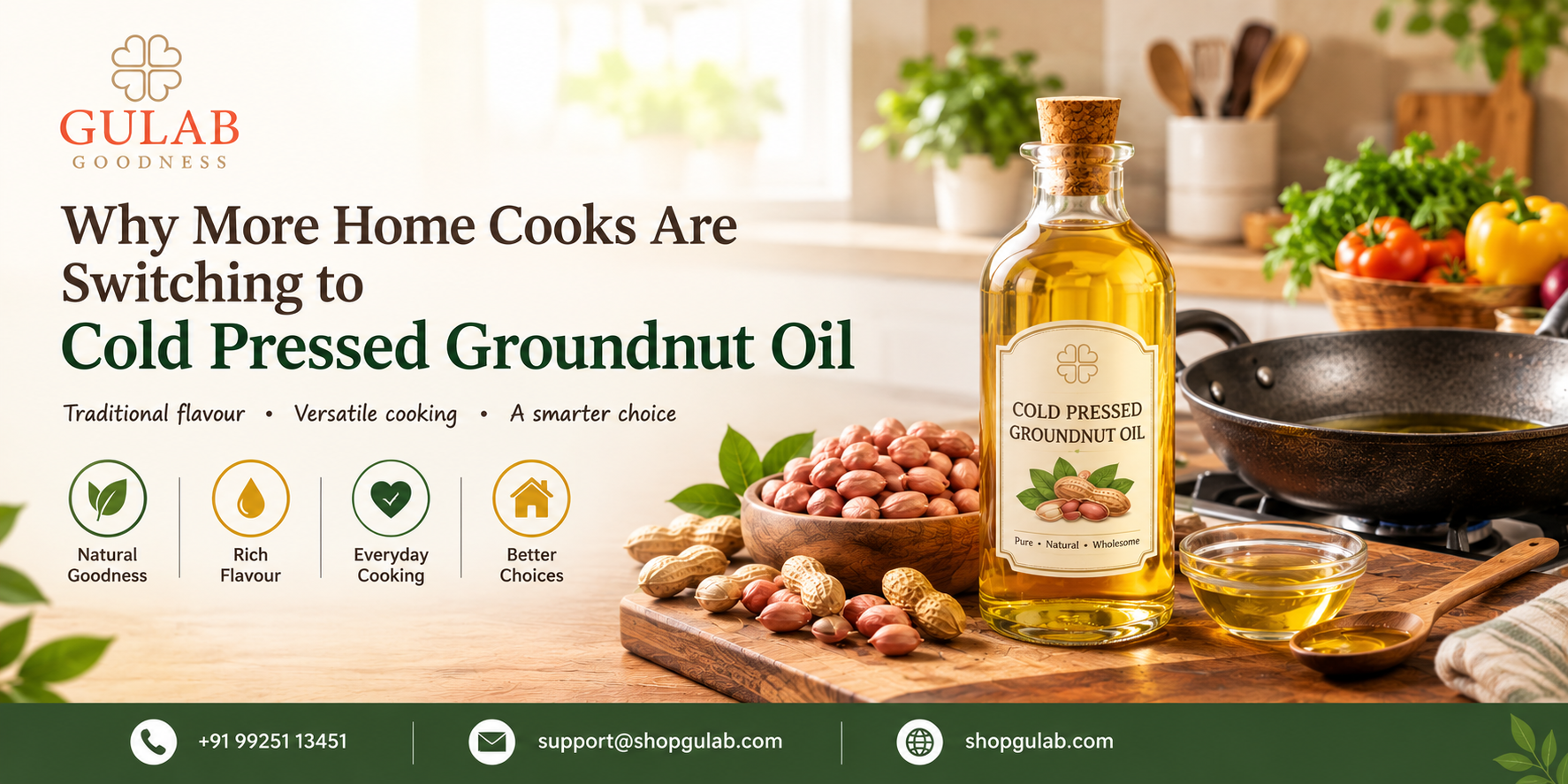
 Walk into a modern Indian kitchen and you will notice that cooking oil is no longer treated as just another grocery item. People are checking labels, comparing extraction methods, paying attention to flavour and thinking more carefully about how an oil fits into their everyday cooking.
That is one reason cold pressed groundnut oil ↗ is getting attention among home cooks. It offers a familiar nutty character, works well with many Indian cooking methods and fits naturally into recipes where the flavour of the oil can actually be noticed.
But the growing interest is not simply about following a trend. For many households, it comes down to practical questions: Does the oil suit everyday cooking? How does it taste? Is it easy to use? How should it be stored? And what should you look for when buying it?
Let's look at why this traditional cooking oil is finding its way back into everyday kitchens.
What Makes Cold Pressed Groundnut Oil Different?
The term "cold pressed" refers primarily to how the oil is extracted. Groundnuts are mechanically pressed to release their oil rather than relying on the same type of high-heat industrial extraction associated with some conventional processes.
This distinction matters because the extraction method can influence the oil's aroma, colour, flavour and overall characteristics.
However, "cold pressed" should not automatically be treated as a guarantee that an oil is superior in every respect. The quality of the groundnuts, manufacturing practices, filtration, storage and packaging also matter.
That is where consumers need to look beyond the front label.
1. It Fits Naturally Into Indian Cooking
One of the biggest reasons people choose groundnut cold pressed oil is simple: it works with the food they already cook.
Think about a typical home kitchen. You may use oil for:
-
Preparing tadka for dal
-
Sautéing vegetables
-
Making poha or upma
-
Cooking sabzis
-
Preparing parathas
-
Shallow frying snacks
-
Making chutneys or other traditional recipes
Its mild nutty character can work particularly well with Indian spices. Instead of completely changing the personality of a dish, the oil can complement ingredients such as cumin, mustard seeds, curry leaves, garlic and chillies.
That makes it practical for households that want to change their cooking oil without completely changing their cooking style.
2. The Flavour Is Part of the Appeal
Not every cook wants a completely neutral cooking oil.
For some dishes, a subtle nutty aroma can add another layer to the finished food. This is especially noticeable when oil is used in tadka or when vegetables and spices are lightly sautéed.
The important point is balance. A pleasant aroma does not necessarily mean that an oil is of higher quality, just as a darker colour does not automatically indicate better quality.
When choosing the best cold pressed groundnut oil for your kitchen, consider the complete product rather than judging it only by smell or colour.
3. It Works Across Different Cooking Methods
Home cooking is rarely limited to one technique.
You might make a quick vegetable stir-fry on Monday, prepare dal on Tuesday and fry a snack on the weekend. A cooking oil therefore needs to fit into different parts of your routine.
Cold pressed groundnut oil can be used for everyday methods such as sautéing, tadka and shallow frying. As with any cooking oil, sensible temperature control matters. Avoid heating oil until it smokes and be cautious about repeatedly heating the same oil.
The oil itself is only one part of the cooking equation. Temperature, quantity, cooking duration and how often oil is reused all influence the final result.
4. It Encourages More Conscious Cooking
Interestingly, switching oils can make people pay more attention to how much oil they actually use.
Instead of pouring directly from a large bottle, try measuring the quantity with a spoon or small cup. This makes it easier to control portions, particularly when preparing recipes that do not require much oil.
This approach also fits broader dietary guidance. The World Health Organization notes that fats are concentrated sources of energy and that the quality and quantity of dietary fat both matter. A varied, balanced diet remains more important than relying on any single food or cooking oil.WHO healthy diet guidance ↗
5. More People Are Interested in How Their Food Is Made
Today's shoppers often want more information before putting a food product into their kitchen.
They may ask:
-
Where does the raw material come from?
-
How is the oil extracted?
-
Is the ingredient list straightforward?
-
How has the oil been packaged?
-
What is the manufacturing or best-before date?
-
How should the bottle be stored?
These are useful questions because the phrase "cold pressed" tells you about the extraction method, but not everything about the finished product.
A careful buyer should check the label and product information rather than relying entirely on marketing claims.
6. It Can Be Convenient to Buy Online
Earlier, finding traditionally extracted cooking oils often meant visiting specific local shops or speciality stores. Today, consumers can compare products from home.
Searching for cold pressed groundnut oil online makes it easier to review pack sizes, product descriptions, ingredients, manufacturing information and customer feedback before purchasing.
Still, online convenience should not replace product awareness. Before placing an order, check whether the seller provides clear product information, storage instructions and relevant details about the oil.
7. Proper Storage Makes a Difference
Buying good oil is only half the job. How you store it matters too.
Keep the bottle tightly closed when it is not being used. Store it in a cool, dry place away from direct sunlight and excessive heat. Avoid leaving the bottle open near the cooking stove for long periods.
You should also pay attention to the appearance and smell of an oil over time. If it develops an unusual or unpleasant odour, it is better not to use it.
Good storage is especially important when you buy larger bottles because the oil may remain in your kitchen for a longer period.
8. The Switch Is Often About Familiarity, Not Fashion
There is another reason home cooks are returning to traditional oils: familiarity.
Groundnuts have long been part of Indian food culture, and groundnut oil has a history of use in different regional kitchens. For someone who grew up with its aroma in everyday food, switching to it can feel less like experimenting and more like returning to a familiar ingredient.
At the same time, modern consumers want more transparency and practical information than previous generations may have had.
That combination—traditional familiarity with modern label awareness—is helping keep cold pressed oils relevant in today's kitchens.
How to Choose Cold Pressed Groundnut Oil for Your Kitchen
Rather than asking only which product is "best", look at several practical factors:
Check the extraction information: Make sure the product clearly states its extraction method.
Read the label: Look at ingredients, quantity, dates and storage instructions.
Consider the packaging: Choose packaging that protects the oil from unnecessary exposure to heat and light.
Think about your cooking habits: A household that mainly prepares tadka and sabzis may have different requirements from someone who frequently makes fried snacks.
Buy an appropriate quantity: Larger packs may appear convenient, but choose a size that you can store properly and use within a reasonable period.
These simple checks can help you make a more informed decision without getting distracted by exaggerated health or quality claims.
A More Practical Way to Look at the Switch
Switching cooking oil does not need to be an all-or-nothing lifestyle decision.
For many home cooks, the attraction is much simpler. They want an oil that suits familiar recipes, provides a pleasant flavour, works across everyday cooking methods and comes with clear product information.
Cold pressed groundnut oil can fit that routine when used sensibly and stored correctly. More importantly, the choice of cooking oil should sit within the bigger picture of a balanced diet that includes vegetables, fruits, whole grains, pulses, nuts and other nutritious foods.
Conclusion
The growing interest in cold pressed groundnut oil is not difficult to understand. Its familiar flavour, versatility in Indian cooking and traditional connection make it an appealing option for many households.
But choosing an oil should be based on more than a popular label. Pay attention to the extraction method, raw material, packaging, storage, product information and the way you use the oil at home.
When those basics are handled well, switching your everyday cooking oil can be a practical kitchen change rather than just another food trend.
About the Brand
Gulab Goodness ↗ focuses on bringing cooking oils to everyday kitchens with an emphasis on quality and practical use.
Contact Us
Have questions about the oil, packaging or which option may suit your cooking routine? Contact us ↗ and our team will be happy to help.