 Planning meals for an entire week sounds organised in theory. In reality, Monday arrives, everyone is hungry, and you are standing in the kitchen wondering what to cook.
A simple weekly plan can solve much of that daily guesswork. And if you regularly enjoy cold-pressed extra virgin coconut oil ↗, you do not need to build your meals around elaborate recipes. Instead, you can use it thoughtfully across familiar breakfasts, vegetables, dals, rice dishes and quick evening meals.
The idea is not to eat the same food every day or treat one ingredient as the answer to everything. It is about creating a practical rhythm where meals include variety, sensible portions and ingredients you actually enjoy eating.
Start With Your Actual Eating Habits
Before creating a seven-day meal plan, look at what you already cook.
Do you usually eat a traditional breakfast? Do you carry lunch to work? Does dinner need to be ready in 20 minutes? Are weekends the only time you have enough time for elaborate cooking?
These questions matter more than creating a picture-perfect meal chart.
For example, someone who has only 30 minutes for dinner should not create a plan containing complicated recipes every night. A useful meal plan should make cooking easier, not turn the kitchen into another source of stress.
Where Cold Pressed Extra Virgin Coconut Oil Fits In
The easiest way to include cold-pressed extra virgin coconut oil in a weekly routine is to treat it as one cooking ingredient rather than the centre of your diet.
You can use an appropriate amount for sautéing vegetables, preparing tempering, cooking certain traditional recipes, or adding its characteristic coconut aroma to dishes where it fits naturally.
The quantity you use should depend on the recipe, your overall dietary needs and personal preferences. There is no need to add extra oil simply because it is a cold-pressed product.
A balanced meal is about the complete plate—not just the cooking oil.
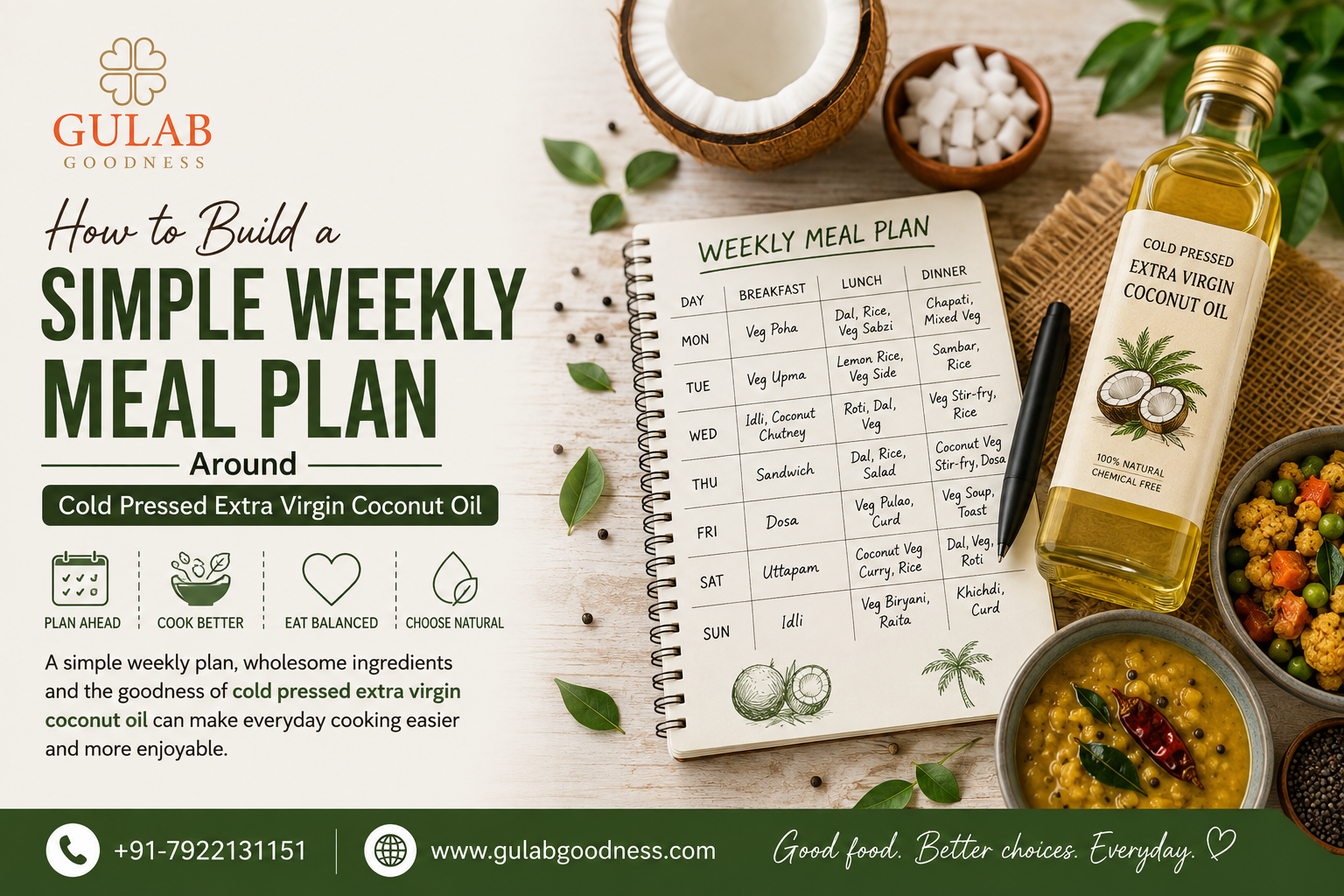
A Practical 7-Day Meal Plan
Here is an example of how you can structure a week without making every meal complicated.
Monday: Keep the Start Simple
Breakfast: Vegetable poha with peanuts
Lunch: Dal, rice and seasonal vegetable
Dinner: Chapati with mixed vegetable sabzi and curd
Use cold-pressed extra virgin coconut oil where its flavour works well, particularly in a simple vegetable preparation or tempering.
Monday is usually busy, so familiar food is often better than experimenting with a complicated recipe.
Tuesday: Add a South Indian Touch
Breakfast: Vegetable upma
Lunch: Lemon rice with vegetable side dish
Dinner: Vegetable sambar with rice
If you enjoy coconut's aroma, Tuesday is a good day to use coconut oil in a suitable tempering. Curry leaves, mustard seeds and green chillies can complement its flavour particularly well.
Wednesday: Make Vegetables the Focus
Breakfast: Idli with coconut chutney
Lunch: Roti with dal and mixed vegetables
Dinner: Vegetable stir-fry with rice
Midweek meals can become repetitive, so changing the vegetables rather than changing the entire recipe can keep things interesting.
Try beans one week, carrots and peas another, and seasonal vegetables when available.
Thursday: Use Leftovers Intelligently
Breakfast: Vegetable sandwich or leftover chapati roll
Lunch: Leftover dal with rice and fresh salad
Dinner: Coconut vegetable stir-fry with dosa or rice
A weekly plan should also help reduce unnecessary food waste.
If you have leftover cooked vegetables, rice, or dal, look for a sensible way to reuse them rather than automatically preparing another completely separate meal.
Friday: Keep Dinner Relaxed
Breakfast: Dosa with chutney
Lunch: Vegetable pulao with curd
Dinner: Homemade vegetable soup with toast or a simple rice preparation
Friday does not have to mean ordering food because there is nothing planned. Keeping one or two quick recipes ready can make the evening easier.
Saturday: Try a More Enjoyable Recipe
Breakfast: Masala dosa or vegetable uttapam
Lunch: Coconut-based vegetable curry with rice
Dinner: Light dal, vegetables and roti
This is where virgin coconut cold-pressed oil can be particularly interesting if you enjoy its characteristic flavour in traditional or coconut-forward recipes.
The important point is to use it because it suits the dish—not simply because it is available in the kitchen.
Sunday: Cook Something Special
Breakfast: Vegetable dosa or homemade idli
Lunch: Vegetable biryani or a traditional rice meal
Dinner: Light vegetable khichdi with curd
Sunday is a good opportunity to prepare something that takes a little more time.
You can also prepare basic ingredients for the coming week—wash vegetables, portion ingredients, and cook staples where appropriate. That small amount of preparation can make Monday much easier.
A Simple Weekly Shopping Strategy
Meal planning becomes much easier when your shopping list follows the menu.
Instead of buying ingredients randomly, divide your list into categories:
Staples: Rice, atta, dal, and other grains or pulses.
Vegetables: Choose a mixture of familiar favourites and seasonal options.
Fresh ingredients: Coconut, curry leaves, coriander, chillies, ginger and lemons as needed.
Protein-rich foods: Pulses, beans, dairy or other foods that suit your dietary preferences.
Cooking essentials: Keep your preferred cooking oils and basic spices available.
This approach can also reduce the temptation to buy ingredients for recipes you never actually make.
How to Choose the Right Coconut Oil for Your Kitchen
When comparing the best cold-pressed virgin coconut oil, avoid making the decision based only on words such as "premium" or "natural" on the front of a package.
Instead, check the product information, ingredients, packaging, quantity, storage directions, and best-before details.
If you are looking for best virgin cold-pressed coconut oil options, consider whether the product's flavour and characteristics actually suit the food you cook.
The same principle applies when searching for the best extra virgin cold pressed coconut oil. "Best" is not necessarily a universal category; your choice should also depend on intended use, product information, freshness, and your personal cooking preferences.
Don't Let One Ingredient Take Over Your Meal Plan
This is an important point.
A meal plan built around cold-pressed extra virgin coconut oil should still include a variety of foods. Rice, roti, vegetables, pulses, fruits, dairy or suitable alternatives, and other foods can all have a place depending on your individual dietary requirements.
FSSAI's Eat Right India initiative promotes dietary diversity and balanced diets alongside safe and sustainable food practices. (FSSAI ↗)
So rather than asking, "How can I use coconut oil in every meal?", ask:
"Which meals can benefit from its flavour and cooking properties?"
That small change makes the approach much more practical.
5 Meal-Planning Mistakes to Avoid
Planning Seven Completely Different Menus
This sounds exciting but can create unnecessary shopping and preparation.
Repeat basic ingredients across different meals instead.
Ignoring Your Schedule
A recipe that takes an hour may be fine on Sunday but frustrating on a busy Wednesday evening.
Match your recipes to your available time.
Buying Too Many Perishables
Buying vegetables for seven ambitious recipes can lead to waste when plans change.
Choose ingredients that can work across multiple dishes.
Using More Oil Than the Recipe Needs
A cold-pressed oil does not need to be used excessively. Measure according to the recipe and your dietary needs.
Forgetting Snacks and Breakfast
People often plan lunch and dinner but forget the meals they are most likely to improvise.
Keep a few simple breakfast and snack options ready so that the plan works throughout the day.
How to Make the Plan Easier to Follow
The best meal plan is one you can actually maintain.
Try preparing a few basics at the beginning of the week:
-
Cook a batch of dal or another suitable staple.
-
Wash and organise vegetables.
-
Keep commonly used spices accessible.
-
Portion ingredients for quick meals.
-
Make a rough seven-day menu rather than a rigid timetable.
-
Keep one or two backup meals for unexpectedly busy days.
And leave some flexibility.
If Tuesday's planned vegetable dish becomes Wednesday's dinner, nothing has gone wrong. A meal plan should guide you—not control you.
E-E-A-T Tip: Make Food Decisions Based on Reliable Information
When writing or reading about food and cooking oils, it is easy to come across exaggerated claims. A trustworthy approach is to separate culinary experience from nutritional or health claims.
For practical meal planning, focus on things you can verify: ingredients, preparation methods, portion sizes, food hygiene, storage instructions, and product labelling.
For broader food-safety and healthy-eating information in India, the official FSSAI resources provide consumer-oriented information through the Eat Right India initiative. (FSSAI ↗)
That is a better foundation than relying on social-media claims that promise that one ingredient can transform your entire diet.
Final Thoughts
A weekly meal plan does not have to look like a strict diet chart. It can simply be a realistic list of meals that helps you decide what to cook before hunger takes over.
If you enjoy the aroma and flavour of cold-pressed extra virgin coconut oil, include it where it naturally complements your food. Use it for suitable recipes, keep your meals varied, and pay attention to the overall balance of your weekly menu.
The real benefit of meal planning is not perfection. It is having fewer "What should I cook today?" moments and making everyday cooking feel a little more manageable.
For product information or guidance about choosing coconut oil for your everyday cooking needs, contact ↗Gulab Goodness ↗ and our team will be happy to assist.
Frequently Asked Questions
1. Can I use cold-pressed extra virgin coconut oil every day?
It can be included as part of everyday cooking, provided the amount fits your overall dietary needs and the recipes you prepare. Variety in cooking fats and foods can also be considered as part of an overall balanced eating pattern.
2. Does every meal in the weekly plan need to contain coconut oil?
No. There is no reason to use it in every meal. Use it when its flavour and cooking characteristics suit the recipe.
3. What foods pair well with coconut oil?
It can work particularly well in recipes featuring coconut, curry leaves, vegetables, dals and certain South Indian-style preparations. The best choice ultimately depends on the flavour you enjoy.
4. How should I choose the best cold-pressed virgin coconut oil?
Check the ingredient information, packaging, quantity, storage directions, best-before information, and suitability for your intended cooking use rather than relying solely on marketing language.
5. Can beginners follow this type of weekly meal plan?
Yes. Start with familiar meals and a few simple recipes. Once the routine becomes comfortable, you can gradually introduce new dishes.
6. Should a weekly meal plan include variety?
Yes. Variety helps prevent meals from becoming repetitive and can make it easier to include different foods across the week. FSSAI's Eat Right India guidance also highlights dietary diversity and balanced diets.